

Introduction: How Raids Shape World of Warcraft’s Narrative
Throughout its nearly two-decade history, World of Warcraft has told some of its most powerful and immersive stories through raids. These encounters serve as the culmination of expansion-long narratives, pitting players against legendary foes and resolving conflicts that have spanned multiple expansions.
Each raid is more than just a collection of bosses—it’s an essential chapter in WoW’s overarching story, offering deep lore connections, unexpected plot twists, and dramatic conclusions to long-running arcs. From the fall of Arthas in Icecrown Citadel to the cosmic battles of the Shadowlands, WoW’s raids define the game’s evolving mythology.
In this deep dive, we’ll explore the lore behind some of WoW’s most iconic raids, examining their historical significance, narrative impact, and lasting influence on the game’s world-building.
Molten Core: The Birth of Raid Storytelling in WoW
Vanilla WoW introduced players to Molten Core, the game’s first true raid, which set the stage for how raid lore would be handled in the years to come. Though early raids lacked the cinematic storytelling of modern expansions, they still had deep lore connections rooted in Warcraft’s past.
The Lore of Molten Core
Deep beneath Blackrock Mountain, the elemental lord Ragnaros the Firelord ruled over a vast lava-filled cavern. Ragnaros, a being of immense power, was summoned to Azeroth during the ancient war between the Elemental Lords. Though the Titans imprisoned him in the Firelands, the Dark Iron dwarves—led by their sorcerer-thane Thaurissan—attempted to harness his power. This backfired spectacularly, leading to the destruction of much of the surrounding land and the creation of the Burning Steppes and Searing Gorge.
Molten Core marked the first large-scale threat that players had to neutralize, serving as a perfect introduction to raid-scale storytelling. Ragnaros wasn’t just a random boss—he was a force of destruction that had shaped Azeroth’s geography and history.
Why It Still Matters
Molten Core introduced themes that still define WoW’s raid lore today—ancient evils imprisoned beneath Azeroth, power-hungry factions seeking to exploit them, and the necessity of champions rising to stop them.
Karazhan: The Haunting Legacy of Medivh
One of WoW’s most atmospheric and lore-rich raids is Karazhan, located in the abandoned tower of Medivh, the last Guardian of Tirisfal. Unlike many raids that revolve around world-ending threats, Karazhan’s lore is deeply personal, tied to one of Warcraft’s most enigmatic figures.
The Dark History of Karazhan
Medivh, the Guardian of Tirisfal, was one of Azeroth’s most powerful mages. However, he was corrupted before birth by the dark titan Sargeras, who used him as a conduit to open the Dark Portal and unleash the Horde onto Azeroth. After Medivh’s death at the hands of Khadgar and Anduin Lothar, his tower, Karazhan, became a twisting labyrinth of spectral echoes, corrupted magic, and temporal distortions.
By the time players entered the raid in The Burning Crusade, Karazhan was a haunted shadow of its former glory, filled with supernatural horrors, eerie echoes of the past, and remnants of Medivh’s power.
Narrative Depth and Horror Elements
Karazhan was not just a dungeon—it was a living story, filled with cryptic whispers, visions of Medivh’s past, and unsettling encounters like the Opera Event and the Chess Match against Medivh’s ghost. Unlike most raids, Karazhan wasn’t about stopping a world-ending villain—it was about unraveling the mysteries of a cursed place and confronting the echoes of one of WoW’s most infamous figures.
Why It Still Matters
Karazhan remains one of the most beloved and narratively rich raids in WoW’s history. Blizzard revisited it in Legion, reinforcing its role as a pivotal location in Azeroth’s magical history.
Icecrown Citadel: The Climax of Warcraft’s Greatest Story
No discussion of WoW’s greatest raid lore would be complete without Icecrown Citadel, the culmination of the Wrath of the Lich King expansion and one of the most emotionally charged narratives in gaming history.
The Story Behind Icecrown Citadel
At the heart of Northrend, Icecrown Citadel was the fortress of the Lich King, Arthas Menethil, and the seat of his terrifying undead empire. The raid represented the final battle against one of Warcraft’s most iconic villains, tying together years of storytelling that began in Warcraft III.
Players fought through the halls of the Scourge, battling Arthas’ most powerful lieutenants, including Lady Deathwhisper, Professor Putricide, and Sindragosa, before finally confronting the Lich King himself atop the Frozen Throne.
The Lich King Fight: A Masterclass in Storytelling
The final battle against Arthas wasn’t just a raid boss fight—it was a cinematic moment that redefined what WoW raids could be. The fight itself was grueling, with multiple phases symbolizing Arthas’ immense power. But the true highlight was the post-fight cutscene, where players were seemingly doomed to join the Scourge forever, only to be saved at the last moment by Tirion Fordring.
In his final moments, Arthas saw his father’s spirit, whispering, “Is it… over?”—a heartbreaking line that resonated with every Warcraft fan who had followed his tragic story since Warcraft III.
Why It Still Matters
Icecrown Citadel remains the gold standard for raid storytelling. It combined gameplay, cinematic storytelling, and years of narrative buildup into a single unforgettable experience.
The Black Temple: Illidan’s Redemption Arc Begins
Long before Blizzard explored Illidan’s redemption in Legion, his story reached its dramatic climax in The Burning Crusade’s Black Temple raid.
Illidan’s Rise and Fall
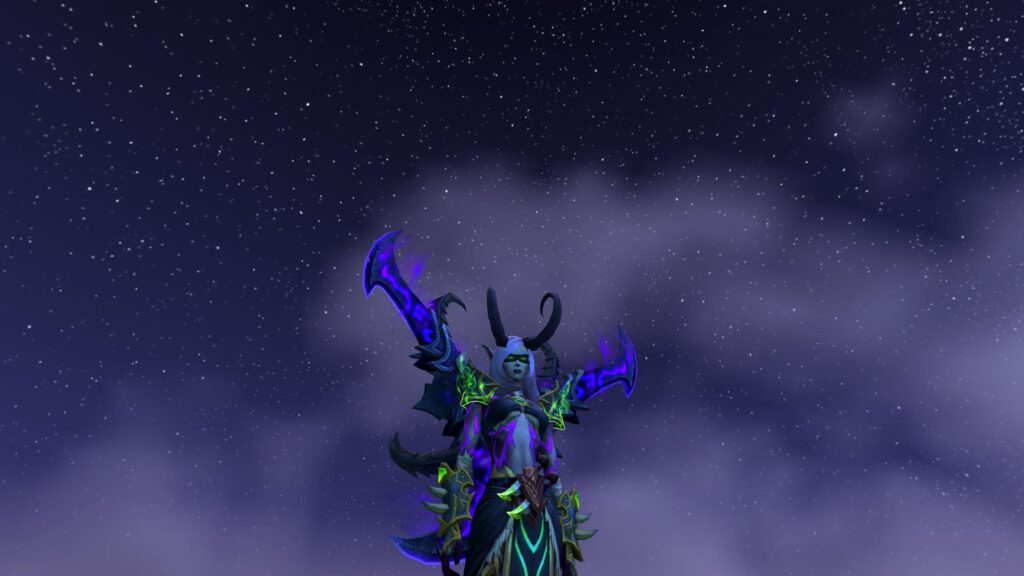
Illidan Stormrage, the self-proclaimed Lord of Outland, had once sought to defeat the Burning Legion, but in doing so, became something monstrous himself. By the time players faced him in the Black Temple, Illidan had transformed into a tyrant ruling from his twisted fortress, believing he was the only one who could stop the Legion.
The Tragic Finale of The Black Temple
Unlike many other villains, Illidan wasn’t entirely evil—he was a flawed antihero who thought he was saving Azeroth, even as he became consumed by his own power. When players finally defeated him, his dying words—“You are not prepared”—suggested that he still believed in a greater threat yet to come.
Why It Still Matters
Illidan’s story didn’t end in The Burning Crusade—his “death” in the Black Temple set up his later return in Legion, where players finally learned the truth of his motives. The raid took on even deeper significance in hindsight, cementing Illidan as one of the most complex characters in Warcraft history.
The Evolution of Raid Storytelling in World of Warcraft
Blizzard’s approach to raid storytelling has evolved dramatically over the years. Early raids, like Molten Core and Blackwing Lair, had minimal in-game storytelling. Players who knew the lore behind these encounters had to rely on external sources like the Warcraft strategy books or online databases.
However, as WoW’s expansions progressed, Blizzard started weaving deeper narratives directly into the raid experience, integrating cutscenes, NPC interactions, and in-game cinematics that made the storytelling more immersive.
How Blizzard Expanded Raid Narratives Over Time
As new expansions were released, Blizzard experimented with different ways to tell stories within raids. Each expansion refined how lore was presented, making each new raid a more immersive and cinematic experience.
Cataclysm: Elemental Chaos and the Death of a Dragon Aspect
The Dragon Soul raid in Cataclysm was a landmark in WoW’s raid storytelling. It was the first raid to feature fully voiced NPCs, real-time cinematic sequences, and in-raid storytelling moments that guided players through the battle against Deathwing, the corrupted Aspect of Earth.
This raid differed from older “dungeon-style” raids because it wasn’t just a single location filled with bosses—it was an epic, world-spanning encounter, where players fought their way through Wyrmrest Temple, boarded an airship, and ended with a battle on Deathwing’s back.
For the first time, the raid’s story unfolded dynamically, rather than players simply reading quest text or lore books to understand the significance of their actions.
Mists of Pandaria: A Raid That Changed an Empire
The Siege of Orgrimmar raid in Mists of Pandaria was a turning point in Warcraft’s political history. Unlike previous raids, which focused on external enemies, this raid brought the battle into Horde territory, making it one of the most politically significant raids in the game’s history.
For the first time, players weren’t just fighting a cosmic or supernatural enemy—they were toppling a tyrant within their own ranks. The fall of Garrosh Hellscream wasn’t just a raid boss fight—it reshaped Horde leadership, setting up future expansions’ faction conflicts.
This was also the first time Blizzard experimented with multiple raid endings, as Garrosh’s defeat would lead to major repercussions in later expansions, including the rise of the Iron Horde in Warlords of Draenor.
Legion and Beyond: The Rise of Fully Cinematic Raids
With Legion, Battle for Azeroth, and Shadowlands, Blizzard fully embraced cinematic storytelling in raids, making them feel like interactive chapters of an epic saga rather than just a series of fights.
Antorus, the Burning Throne: The End of the Legion’s Reign
The final raid of Legion, Antorus, the Burning Throne, featured one of the biggest narrative payoffs in Warcraft history. Players ventured deep into the Burning Legion’s stronghold, battling Titans, corrupted warlords, and the fallen Titan Argus himself.
This raid was unique because it didn’t just focus on one expansion’s villain—it tied together decades of Warcraft lore, finally bringing the story of Sargeras and the Titans to a close.
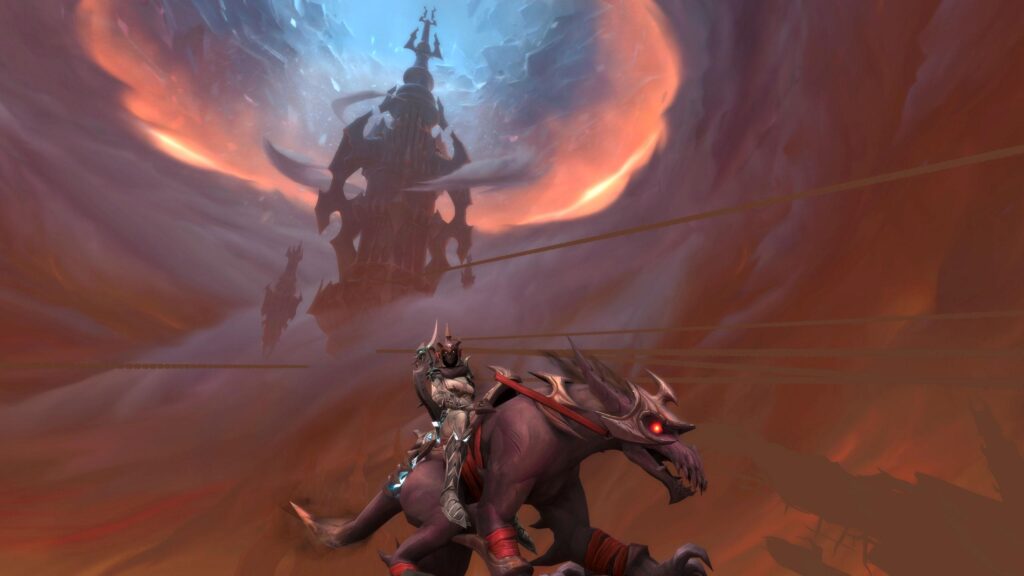
The final cinematic, where Sargeras stabs Azeroth with his massive sword, had world-altering consequences that directly led into Battle for Azeroth.
Blizzard had reached a point where raids were no longer just the conclusion of an expansion’s story—they were setting up the next expansion’s conflicts in major ways.
How Raid Lore Will Evolve in Future Expansions
As Blizzard continues to refine WoW’s storytelling, future raids will likely push even further into cinematic integration, dynamic environments, and branching narratives.

What Could Future Raids Look Like?
- More Player Choices Affecting Raid Outcomes – Could we see a future raid where defeating a boss in a certain way changes the next expansion’s storyline?
- Cinematic-Driven Encounters – Future raids may feel even more like interactive movies, blending cutscenes, real-time dialogue, and branching fights.
- Expanding Beyond Azeroth – With The War Within and beyond, we could see more raids that take place in other dimensions, Titan worlds, or ancient hidden civilizations.
Blizzard has already evolved raid storytelling from simple dungeon crawls to epic, cinematic sagas, and it’s likely they will continue pushing the boundaries of what raid narratives can be.
Final Thoughts: Why Raid Lore Defines World of Warcraft’s Legacy
Raids aren’t just boss fights and loot drops—they are living stories, shaping Azeroth’s past, present, and future. Some raids serve as the dramatic end to expansion-long conflicts, while others uncover ancient secrets and foreshadow the next great battle.
✔ Molten Core and Black Temple laid the foundation for what raid storytelling could be.
✔ Icecrown Citadel and Antorus delivered emotional, cinematic climaxes to years of lore buildup.
✔ Legion and Battle for Azeroth introduced fully cinematic, world-altering raid experiences.
✔ Future raids will continue pushing the limits of dynamic storytelling, creating even more immersive experiences.
Whether you’re fighting for the fate of Azeroth or uncovering the dark secrets of the Titans, raiding in WoW is more than just gameplay—it’s a journey through Warcraft’s most epic stories.



Leave a Reply